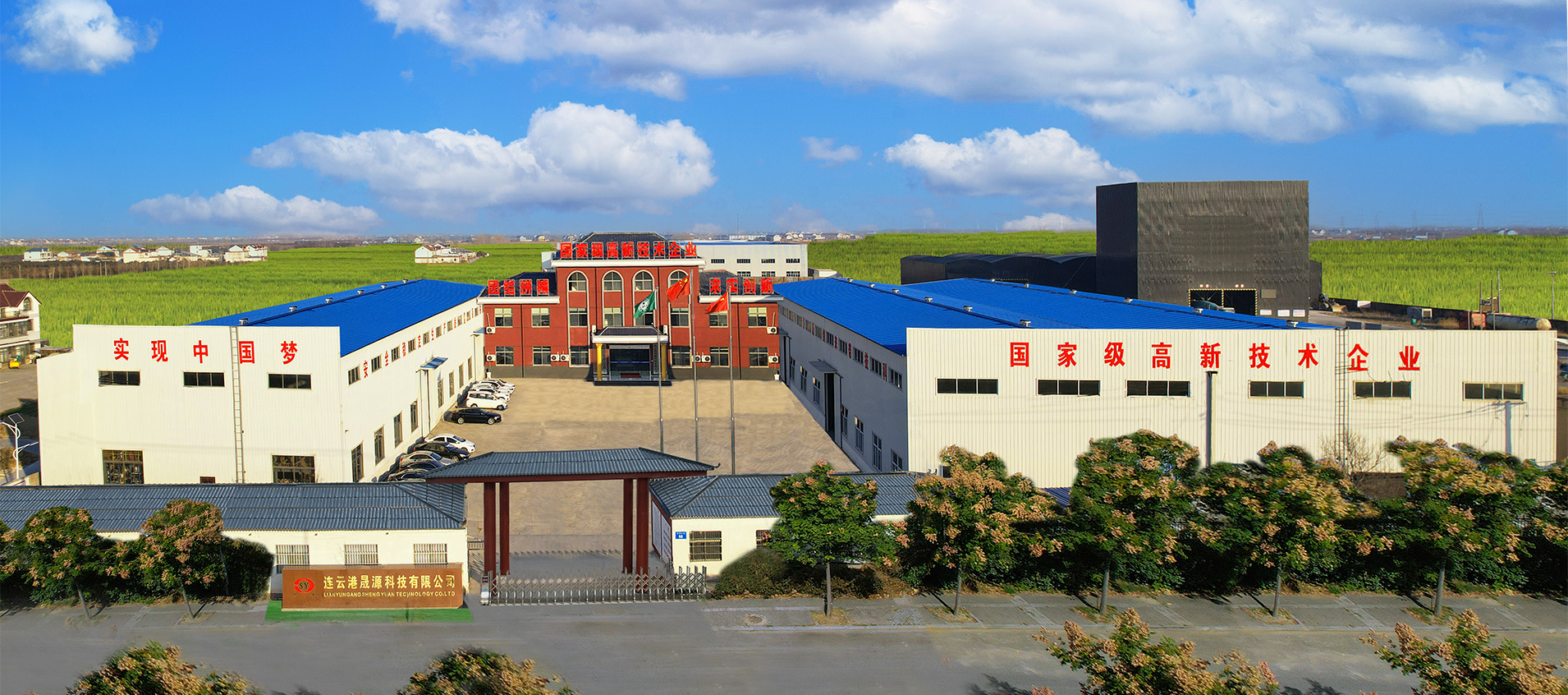

Lianyungang Shengyuan Technology Co., Ltd. is a high-tech enterprise that has successfully developed a water-cooled wall alloy anti-wear robot device, specialized materials, and droplet deposition process method with independent intellectual property rights for solving the wear of circulating fluidized bed boilers and on-site construction through years of independent research and development and process testing. It has obtained more than ten invention and utility model patents.
Introduction to the process of fully automatic alloy deposition and anti-wear technology

1. Deposition technology is a deposition process that uses a deposition heat source to deposit materials with certain properties onto the surface of a substrate (workpiece), forming a metallurgical bond. Using the method of deposition to obtain a deposited metal layer with special properties such as wear resistance, heat resistance, and corrosion resistance on the surface of the welded component.
The fully automatic alloy deposition system adopts both distributed converter deposition system and powder core alloy fuse deposition water-cooled wall alloy anti-wear device system and method. The specific process is to melt the alloy fuse into droplets through the heat generated by high-voltage arc, and then use high-speed pulse droplet throwing mechanism to throw the droplets onto the surface of the workpiece, thus forming a metal metallurgical bonding deposition process.
New Anti Wear Technology for Circulating Fluidized Bed Boilers: Introduction to Fully Automatic Alloy Deposition Anti Wear Technology

Introduction to the process of fully automatic alloy deposition and anti-wear technology
1. Based on arc voltage sensing and secondary variable current automatic deposition technology: resin deposition technology
The use of arc voltage sensing technology ensures high-speed and high-efficiency deposition process under equal arc length and current conditions, achieving low current density and small stable deposition process, and ensuring ultra-low dilution rate. During the arc combustion process, real-time detection of arc voltage and current is carried out, and the wire feeding speed is adjusted based on the deposition speed to achieve mechanical induction combined with current waveform control of droplet transition.
Due to the fact that the workpiece itself is not a one-dimensional plane, but a three-dimensional structure, the welding process is achieved using a fully automatic robot welding machine. The welding process involves laser scanning of the workpiece surface, computer synthesis of the three-dimensional shape of the workpiece surface, automatic calculation and analysis of the construction sequence and welding gun positioning, and welding construction. The above steps are repeated repeatedly until the welding area is completed. The entire process is similar to "3D" surface metal printing technology.
The anti-wear technology is an active anti-wear technology, which means that a layer of alloy material with a hardness higher than HRC50 is deposited on the transition zone of the boiler using a full screen curved surface deposition method. Generally, the low thickness can be guaranteed to be 1.5mm or more, and the thickness is increased according to the required wear life.
Technical performance and characteristics of fully automatic alloy deposition and reconstruction process
1. The alloy deposition layer is metallurgically bonded to the substrate, and the bonding strength remains consistent with the original substrate
During the alloy deposition process, the substrate material only undergoes surface micro melting, with a micro melting layer of 0.2-0.5mm. The heat affected zone of the substrate is extremely small, generally 0.5-0.8mm.
During the alloy deposition process, the temperature rise of the base material does not exceed 80 ℃, and there is basically no thermal deformation.
4. The alloy deposition technology has good controllability and is easy to achieve automated control.
5. The alloy deposition layer and substrate have no coarse casting structure, the deposition layer and its interface structure are dense, the crystals are small, and there are no defects such as pores, inclusions, cracks, etc.

6. The structure of the alloy deposition composite layer is composed of gradient functional materials with different characteristics, including the bottom layer, middle layer, and surface layer. The bottom layer has good wettability with the substrate and high bonding strength; The intermediate layer has certain advantages such as strength, hardness, and good crack resistance; The surface layer has properties such as erosion resistance, wear resistance, and corrosion resistance, which ensures the safety and usability of the welded workpiece.

Characteristics of droplet deposition process
1. Active anti-wear and anti-corrosion, wear-resistant and durable (3-8 years), controllable thickness (2-5mm), controllable hardness (HRC45-60), metallurgical bonding, micro melting on the surface of the base material (0.2-0.5mm), low temperature rise of the base material (<80 ℃), and no deformation of the pipe screen.
Automated construction with 2 robots, metal repair and reconstruction with "3D" droplet filling printing, and enhanced heat transfer.
Application of "3D" fully automatic alloy deposition reconstruction anti-wear technology

Wear mechanism: Flow characteristics inside the circulating fluidized bed boiler

Wear mechanism: The main wear areas of circulating fluidized bed boilers

Wear mechanism and influencing factors

Calculation of wear rate of circulating fluidized bed boiler

Wear at the interface of refractory materials in circulating fluidized bed boilers
The key to anti-wear of CFB boilers is the interface between the refractory material pouring in the dense and dilute phase zones and the water-cooled wall of the smooth tube
In the boundary area between the two, the particle concentration is relatively high, and the direction of the pipe at the boundary will be inconsistent with the flow direction of the material, which is prone to wear and tear

Wear at the interface of refractory materials

Wear and tear in the four corner area of the water-cooled wall

The four corners of the water-cooled wall are coated with refractory materials to prevent abrasion

Wear and tear of wear-resistant refractory materials in the four corner area of the water-cooled wall after detachment

Wear and tear of the uneven area of the water-cooled wall in the dilute phase region

Wear and tear of the irregular area of the water-cooled wall in the dilute phase region

Side grinding of water-cooled wall in the inlet area of the separator

Wear and tear at the root of the extended water-cooled screen


Wear of refractory material at the bottom of the overheating screen after detachment

Existing anti-wear technology: spray coating
• Supersonic spraying technology
• Arc spraying

Spraying wear-resistant alloy materials can enhance the wear resistance of water-cooled walls and increase their service life
The spray coating should not be too thick, as the anti-wear effect in areas with severe local wear is limited
Existing Anti Wear Technologies and Applications: Spray Coating - Characteristics and Issues to Consider

Existing anti-wear technology: anti-wear beam
- Fire resistant and wear-resistant materials form convex platforms, which are arranged horizontally or obliquely in multiple stages at certain intervals along the height direction of the water wall
- The wear-resistant convex platform significantly reduces the velocity and concentration of the wall sticking flow in the furnace (the wall sticking flow velocity can be reduced from 8m/s to 2m/s)
- Ensure that the wear resistance life of water-cooled wall tubes is extended from about 3 months to over 1 year, which has gained recognition from certain users
Technical features:
▶ The proactive approach reduces the velocity and concentration of the wall sticking flow in the furnace
▶ Easy and convenient installation, no need for extensive modification of the furnace water-cooled wall
▶ Reliable operation, simple and convenient maintenance
▶ Affects convective heat transfer inside the furnace
Installing wear-resistant beams will reduce the heating surface by about 4% and have an impact of about 5% on the heat absorption of the water-cooled wall in the boiler furnace
After installing wear-resistant beams, assuming no adjustments are made to the boiler's operating conditions and the heating surface area inside the furnace, it will cause an increase in bed temperature under the same load. Considering a heat transfer temperature difference of 520 ℃ on the heating surface of the water-cooled wall in the furnace (assuming a bed temperature of 880 ℃ and a saturated water temperature of 360 ℃), and assuming equal heat absorption before and after installation, the bed temperature after installing the anti-wear device is: (880-360)/(1-5%)+360=907℃
If the heat absorption remains unchanged, installing wear-resistant beams will increase the bed temperature by about 27 ℃
Currently, multiple wear-resistant beams are commonly used to prevent wear and tear

Application of "3D" Metal Filling and Deposition Reconstruction Process in the Anti Wear Field of CFB Boilers
Introduction to the fully automatic alloy deposition and anti-wear process system

Lianyungang Shengyuan Technology Co., Ltd. is committed to metal recycling manufacturing technology, with current research and business focus on the fusion regeneration manufacturing of boiler water-cooled walls and the extension of boiler life. This technology consists of three key technologies: deposition materials, deposition processes, and deposition equipment.

New Anti Wear Technology for Circulating Fluidized Bed Boilers: Fully Automatic Alloy Deposition Anti Wear Technology
Key technological advantages
Deposition material: Our company's proprietary alloy powder core fuse, with organic ratios of Fe, C. Nb, Ni, C. Mn, Si and trace rare earth elements, is used. It has good adhesion with commonly used materials for boiler water-cooled walls, with a surface hardness of over 50 Rockwell hardness. Compared with alloy spraying, the wear resistance life is increased by more than 6-10 times;

Deposition process: Adopting droplet throwing and arc pressure feedback deposition technology, the deposition depth is shallow, the base material dilution rate is low, the workpiece deformation is small, there are basically no deposition cracks, and the appearance is beautiful and smooth.
Welding equipment: It adopts an aluminum alloy portable and detachable guide rail structure, which is easy to install and fully digitally controlled. It has laser detection function for water-cooled wall shape, can automatically adapt to water-cooled wall installation errors, and has wired/wireless remote control function. The overall equipment can form a 5-axis linkage CNC device inside the boiler, and the welding process is fully automated.
New Anti Wear Technology for Circulating Fluidized Bed Boilers: Fully Automatic Alloy Deposition Anti Wear Technology
technological innovation
1. High strength composite recycled materials. Our company has independently formulated drug core composite recycled materials with various alloy elements added to them. After fusion, they form point like and network like hard alloy veins in the metal, with high hardness and toughness, which are more than 6-12 times higher than the original matrix in terms of wear resistance and corrosion resistance.
2. Induced droplet adhesion technology. By using arc pressure feedback technology to control droplet generation and mechanical induction to achieve droplet adhesion, the thickness of the cladding layer is ensured to be uniform, and the transition layer with the base material is extremely thin (<0.5mm) with low heat output, which has no effect on the pressure resistance of the thin-walled tube base material.
3. A fully automatic Cartesian coordinate welding robot with optical 3D detection and 3D printing functions. The welding robot has laser scanning 3D detection function and a 5-axis linkage CNC system, which can automatically complete the 3D shape detection of components and complete 3D printing automatic welding along the shape.
Application innovation:
1. Boiler water-cooled wall mounted portable detachable guide rail system
The institution adopts an all aluminum alloy structure, with lightweight equipment. The entire guide rail system can be easily disassembled into 5 parts using specialized tools, making it easy to carry and pass through narrow boiler ports. The X-axis double guide rail and auxiliary guide rail have a decoupling mechanism, which eliminates the need to maintain parallelism during installation, making it convenient for wall mounted boiler water-cooled systems.
2. Portable remote control technology for boiler water-cooled wall cladding
The remote control device adopts full digital coding and shortwave wireless transmission. During welding, the operator can remotely control it, reducing the damage caused by strong welding light to the operator and improving work efficiency. This remote control device has 1 billion unique codes, and multiple devices will not interfere with each other when used simultaneously
Product/Service - Related Testing Reports

New Anti Wear Technology for Circulating Fluidized Bed Boiler: Introduction to Fully Automatic Alloy Deposition Anti Wear Technology Process
Characteristics of fully automatic deposition anti-wear and anti-corrosion technology and differences from metal spray coating:
• Active anti-wear, with a smooth surface of the alloy deposition layer, no cracks, no pores, and long-lasting wear resistance;
• It can achieve the repair and reconstruction of worn water-cooled walls: In general, a thinned water-cooled wall can be repaired and reconstructed as long as it can withstand pressure and has a wall thickness exceeding 2.5mm during water pressure testing. It is repaired by using a material that is basically the same as the original base material for welding, followed by alloy anti-wear welding, ultimately achieving the goal of reconstruction and improving anti-wear characteristics;
Compared to the mechanical extrusion particle bonding of metal spray coating, the alloy deposition wear-resistant layer is a metallurgical bonding with high bonding strength while ensuring HRC50 or higher;
The thickness is much higher than that of the metal spray coating and can be controlled. Generally, the thickness of the metal spray wear-resistant layer is 0.6mm, and it is easy to fall off beyond this thickness. However, the thickness of the alloy deposition wear-resistant layer can be adjusted according to the actual wear situation of the owner and boiler (2-4mm);


