The lime gypsum desulfurization method is currently the main direction of desulfurization process development. The characteristic that lime gypsum desulfurization does not affect boiler output has made it a widely used method in current desulfurization processes. It is currently the most technologically mature and stable desulfurization process in the world
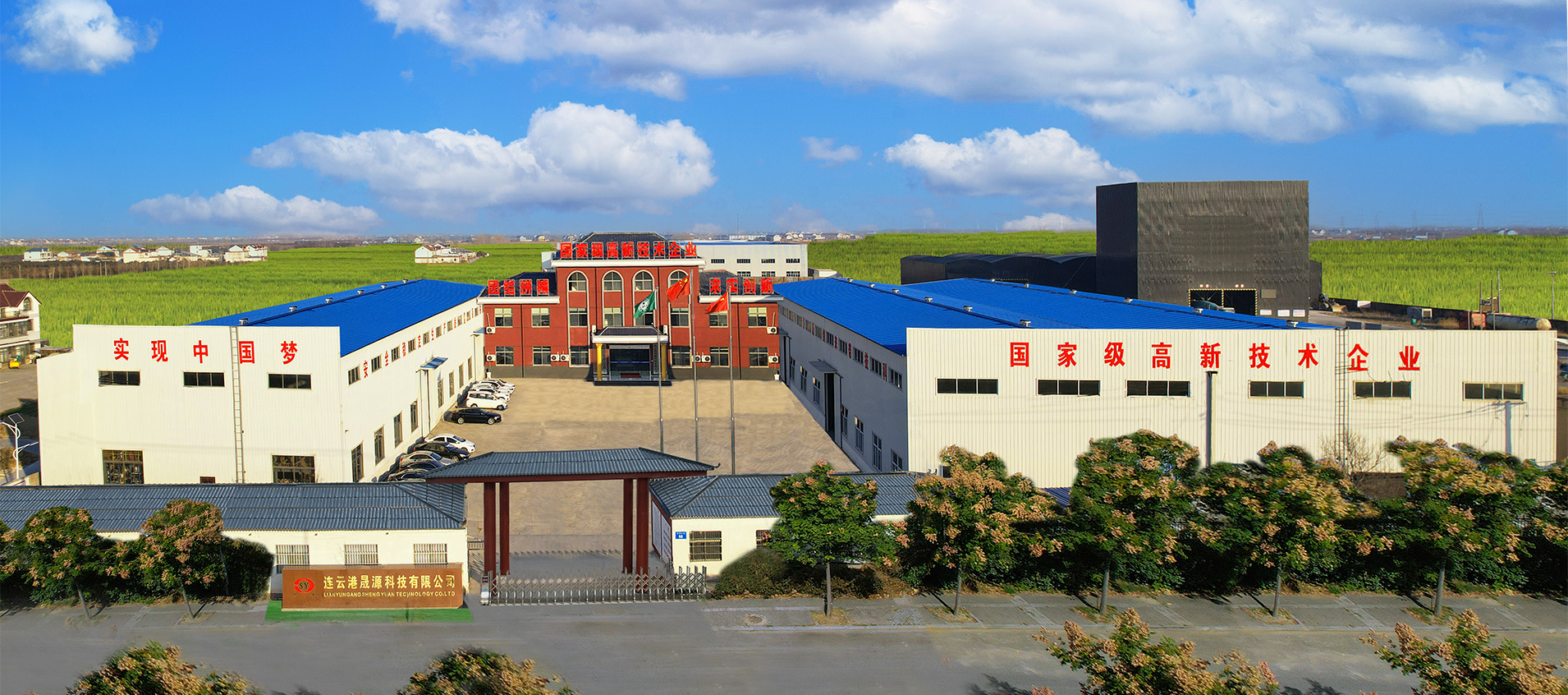
The company currently has a headquarters and a production base in Lianyungang, with a standard steel structure factory building of 3000 square meters. The main equipment includes one 25t crane, one 4m CNC shearing and bending machine, one 2.5m rolling machine, one semi-automatic 4m resistance welding machine, one 36t punching machine, and 15 sets of various welding equipment. The company has also cooperated with a noise laboratory in universities. The company has now gathered an experienced professional team in on-site surveying, data collection, design, experimentation, manufacturing, installation and commissioning services, gradually forming a comprehensive noise control enterprise with various soundproof cosmetic boards as the leader and other related noise control products as the basis!
The air suspension centrifugal blower uses air bearings, direct connection technology, high-efficiency impellers, permanent magnet brushless DC motors, and no additional friction. The fan automatically adjusts the power consumption of the motor based on the output (adjustable air volume range of 40-) to maintain high efficiency in equipment operation. Generally speaking, after technological transformation, it can save 30% -50% energy compared to the original equipment and increase the surplus by 15% -20%.
Variable frequency speed governor. Hydraulic couplings use the conversion between mechanical work and working oil kinetic energy to transmit torque. Although they have a simple structure, low investment, long service life, and can achieve stepless speed regulation and no-load starting, their energy conversion efficiency is low, the speed regulation accuracy is poor, and the working oil is prone to aging and needs to be replaced regularly. They are gradually withdrawing from the market of energy-saving speed regulation for fans and pumps. Variable frequency drive belongs to electrical speed regulation and is a widely used speed regulation method with significant energy-saving effects. However, variable frequency drives are complex electronic devices with low reliability, high failure rate, high requirements for the environment and power grid quality, and are prone to harmonic pollution affecting the power grid. Therefore, harmonic control equipment needs to be added. When using high-voltage frequency converters, it is even necessary to build specialized air-conditioned rooms for cooling and dust isolation.
According to the actual conditions such as medium, pipe diameter, conveying distance, and geometric layout of ash conveying pipelines, design and install automatic plugging devices at intervals. The inlet of the bin pump adopts a pressure reducing valve, which maintains a constant pressure lower than the gas source pressure inside the bin pump during transportation. The design of the pressure depends on the total gas source pressure and the required transportation volume. A high pressure results in a faster ash discharge speed and improved transportation efficiency. At the outlet of the warehouse pump, there is full pipe transportation. When the medium is transported to a certain distance, there will be a pressure rise phenomenon inside the pipe. At this time, the automatic plugging device installed on the pipeline will automatically detect the pressure inside the ash conveying pipe. When the pressure inside the pipeline reaches the pressure required for the automatic plugging device to open, the valve will automatically open to supply air to the pipeline. The medium inside the pipeline will be disturbed by the intake air and will automatically loosen. The pipe blockage at this point will be eliminated, and the valve will automatically close. The medium inside the pipeline will continue to move forward
In daily industrial and agricultural production, the use of storage warehouses for granular materials such as raw coal and ore powder is very common, and its role cannot be underestimated. However, during the process of discharging materials from the storage warehouse, material blockage often occurs, seriously affecting the normal operation of the equipment. Especially for large thermal power plants equipped with direct fired coal pulverizing systems such as raw coal bunkers and coking plant coal towers, once coal blockage occurs in the power plant, the generator units will be forced to urgently reduce output and load shedding, and even unstable boiler combustion may cause a large amount of oil injection, and more seriously, it may lead to boiler fire extinguishing and unplanned unit shutdown.
Composite phase change heat exchanger technology "is a practical and efficient energy-saving technology that can be used for the recovery and reuse of waste heat from exhaust gases such as boilers. It can significantly reduce the exhaust gas temperature while maintaining a high level of pipe wall temperature at the tail of the heat exchanger (only 15 ℃ -20 ℃ lower than the exhaust gas temperature), away from low-temperature dew point corrosion zones;
For a long time, corrosion of the tail heating surface of air preheaters caused by condensation has occurred frequently and is difficult to avoid. So much so that currently in boiler design, it is necessary to alleviate the occurrence of condensation and corrosion by increasing the exhaust gas temperature or using non-metallic materials with extremely poor heat transfer (such as enamel pipes), without fundamentally solving the problem. Simply increasing the exhaust temperature will inevitably result in a significant waste of low-temperature energy, which cannot be further recovered. However, air preheaters often experience corrosion and eventually perforation after running for a period of time. This is a global challenge.
During boiler operation, due to the limitations of water treatment conditions, the boiler feedwater always contains a certain amount of impurities. In order to ensure that the boiler water meets the prescribed standards (to ensure that the salt content of the boiler water is within the allowable range), it is necessary to discharge the boiler water There are two types of discharge methods: continuous discharge and periodic discharge Continuous discharge refers to continuously discharging a portion of boiler water from the area near the evaporation surface of the steam drum with high salt concentration, and supplementing it with relatively clean feedwater to prevent excessive salt content in the boiler water and maintain a certain alkalinity of the boiler water Regular discharge refers to the intermittent discharge of insoluble sediment and impurities such as rust that settle at the bottom of the boiler steam water Boiler blowdown can control the salt content of boiler water, but it causes loss of working fluid and heat, so the amount of boiler blowdown should be limited. The amount of boiler blowdown is usually used
Deaerator exhaust steam is mostly directly discharged into the atmosphere in most power plants and stations across the country. On the one hand, it causes heat loss, affects economic benefits, and on the other hand, it also causes environmental problems such as air pollution and excessive exhaust noise. At the same time, it also occurs in northern China. In the winter when the temperature is low, phenomena such as hanging ice edges at the exhaust outlet of the deaerator and large-scale icing on the top of the machine room occur. (Due to the mixed condensation of saturated steam and cold air into water, ice edges falling and hitting people have occurred, and machine room pressure damage has occurred.) In order to solve the above problems, improve economic benefits, save energy, and eliminate environmental problems caused by this, our company has cooperated with scientific research departments to launch the deaerator exhaust steam recycling and utilization project. The device has been used by dozens of power plants, power stations, and chemical units, The effect is very good, deep
Technical Description: 1. Technical Principles and Key Technologies: This device is an efficient, reliable, and stable core device for recovering and utilizing sensible heat from coking waste gas. It recovers and utilizes the sensible heat from waste gas to produce steam for subsequent use, realizing its industrial application in the coking industry and promoting energy conservation and emission reduction work in the entire coking industry. As the raw gas contains tar steam, water steam, benzene steam, etc., and the temperature is lower than 450 ℃, the middling coal tar of the raw gas will condense. When the temperature is higher than 800 ℃, the carbon in the raw gas will gather to form graphite. In addition, only in the circular cavity of the riser with a diameter of 400~500mm can we think of ways to do this. The heat exchanger cannot leak water into the carbonization chamber, which is what coking practitioners often call "three fears": fear of water leakage, fear of graphite growth, and fear of tar hanging.
Bayer coating energy-saving products are a new generation of high-efficiency energy-saving products developed and produced by our company with independent intellectual property rights. This product has been developed with various additives and is a solvent-free two-component chemical reaction adhesive. In the development and production, adding an efficient accelerator greatly improves the bonding strength, accelerates the curing speed, promotes the thickening of the adhesive, and can be applied to vertical working surfaces without flowing or polluting. Significant breakthroughs have been made in production processes, bonding techniques, construction methods, and other aspects. In terms of material formula and production process, this product selects imported raw materials, which are the main materials after fine chemical synthesis. 60% of the particles have a circumference of less than 1 nanometer, ensuring stability and service life such as emissivity, wear resistance, and high temperature resistance.